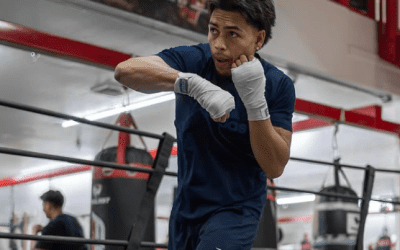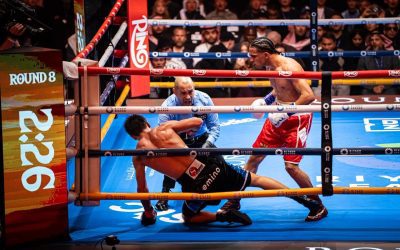
Jai Opetaia admitted he had become “complacent” after his destructive win over Huseyin Cinkara on the Gold Coast, a fight in which he scored one of the knockouts of 2025 but left the ring angry at his own performance and nursing a suspected fractured eye socket. Despite stopping his Turkish-German challenger inside eight rounds and remaining widely regarded as the world’s leading cruiserweight, the Australian believes the bout exposed flaws in his preparation, mindset and execution that he now feels compelled to fix.
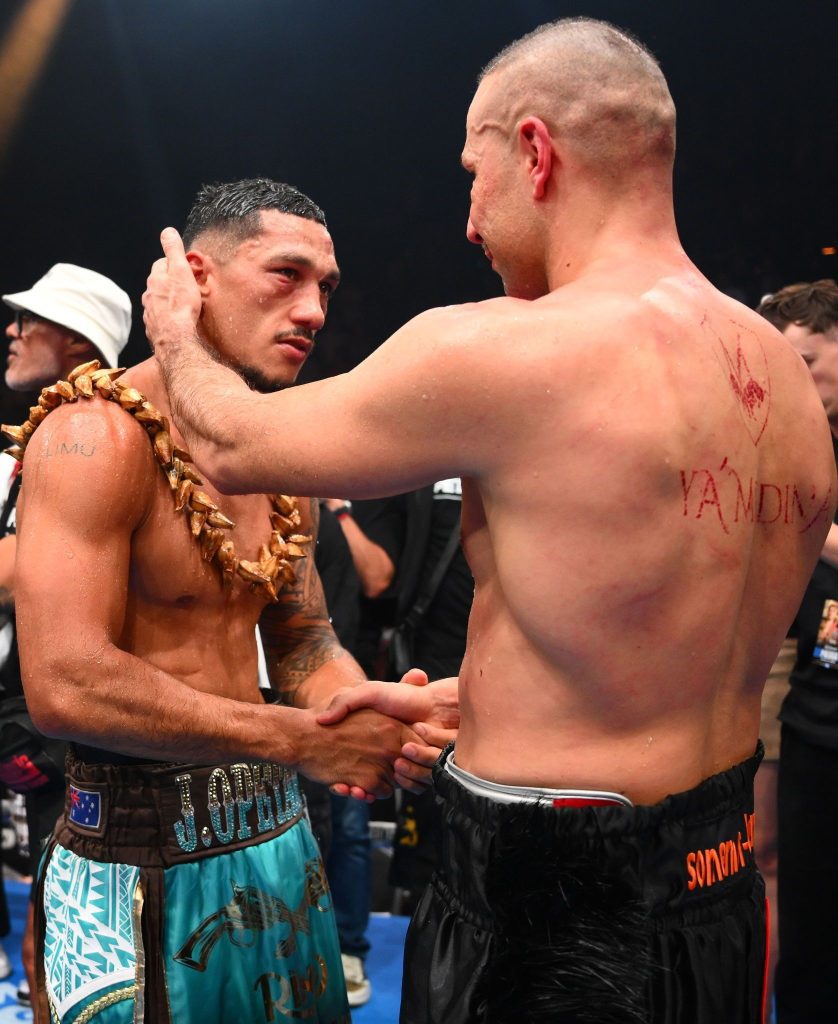
In front of his home fans at the Gold Coast Convention Centre, Opetaia produced another chilling finish, leaving Cinkara flat on his back and requiring medical attention before being taken to hospital, where he was diagnosed with a small fracture in his neck and bruising that will keep him under observation for two days. Yet the champion’s face told its own story, marked up and damaged enough for doctors to suspect a fractured eye socket, an injury that is likely to delay his plans to return to the ring in early 2026 and has forced a reset in his immediate sporting ambitions.
A brutal win that felt like a setback
In the aftermath of the fight, Opetaia’s words were strikingly harsh on himself. The 30-year-old told BoxingScene he was “terrible”, insisting he could fight “a lot better” and that he “needed” this kind of performance to expose how much room there still is for improvement at the top level.
He admitted he had been “getting a bit complacent” and that it “showed in the ring”, pointing specifically to how often he allowed Cinkara to land and to how his legs felt “shot” despite having trained hard for the contest. For a fighter who has stopped all three of his IBF title challengers in 2025, the self-criticism underlines how high his internal standards remain even as highlight-reel knockouts and bold predictions from experts keep his name in the conversation as the number one cruiserweight on the planet.
Technical flaws and physical struggles
Opetaia broke down his own mistakes with unusual clarity for a victorious champion. He felt he should have boxed better, moved “a lot smoother”, stayed light on his toes and limited the punishment he absorbed, arguing that he “shouldn’t be getting hit that much from someone like that”.
He highlighted footwork and distance as key areas for improvement, admitting he was too focused on throwing pure power shots and “trying to take his head off” rather than mixing his offense with smarter movement and defensive responsibility. Physically, he described his legs as “gone”, cramping and failing to respond the way he expected, a disconnect between his conditioning and in-ring output that he clearly wants to address in the gym.
Emotional toll
Beyond tactics and conditioning, Opetaia’s camp unfolded under a heavy emotional cloud. His assistant trainer, Keri Fiu, died unexpectedly from a heart attack during a training session with heavyweight Justis Huni, a tragedy that led to the cancellation of Huni’s rematch with Kiki Toa Leutele and cast a shadow over the entire team.
Fiu’s funeral took place less than a month before fight night, with a long and emotional tribute in the arena just before Opetaia’s ring walk and the champion himself speaking at the service. Walking out to Fiu’s favorite song, Opetaia admitted he was fighting back tears, describing the last weeks as a “massive rollercoaster” of ups and downs that may well have contributed to the struggles he felt in the ring, even if he was reluctant to lean on that as an excuse.
Despite the visible frustration, Opetaia repeatedly framed the experience as “good learning”. He stressed that he knows exactly what he did wrong, what needs to be fixed and how to adjust his training to regain the sharp, mobile version of himself that dominated earlier opponents such as Mairis Breidis and David Nyika.
The Australian insisted he does not feel he has “earned” any post-fight relaxation or celebration from this performance, saying he is “excited to get back in the gym” rather than take a long break. For a fighter whose knockouts have generated significant news coverage and viral clips on every major Youtube Channel and social platform, the determination to treat a brutal win as a warning sign rather than a comfort zone could be crucial to extending his reign.
Cinkara’s condition and the risk factor
Cinkara’s injuries serve as a reminder of the risk both men carried into the ring. In addition to his neck fracture and bruising that require a two-day hospital stay, he had his ambition gradually drained by Opetaia’s body work and the sustained pace the champion set, even as he managed to hurt the Australian with a clean shot that left Opetaia’s legs buckling in an earlier round.
Opetaia acknowledged being caught “with a good shot” but stressed that he recovered quickly and felt fit overall, even if his body “wasn’t keeping up” with him as expected. The combination of his own facial damage and Cinkara’s serious injuries reinforces both the brutality of the contest and the fine margin between dominance and danger at this level.
What comes next for opetaia
Even with a suspected fractured eye socket and harsh self-assessment, Opetaia’s standing at cruiserweight remains formidable. He has stopped all three of his IBF challengers in 2025 and delivered another “chilling” finish against Cinkara, adding to the destructive knockout of David Nyika earlier in the year and strengthening the widespread view that he is the finest cruiserweight in the world.
The injury is likely to delay his targeted early-2026 return, but he has already made clear he does not want a long layoff once medically cleared. “We get this fixed,” he said of the damage to his cheek and eye area, promising that as soon as he is able to fight again, he will be back, a stance that keeps fans, broadcasters and betting predictions attentive to his next move in a division that continues to look for a clear, active king.