


The heavyweight clash between Anthony Joshua and Jake Paul arrives as one of the most polarizing and commercially powerful events in recent boxing history, pairing a former unified world champion with the biggest crossover star of the current era. Beyond the spectacle, the bout is a fully sanctioned professional fight over eight three‑minute rounds with 10oz gloves, meaning the result will go on both men’s official records.
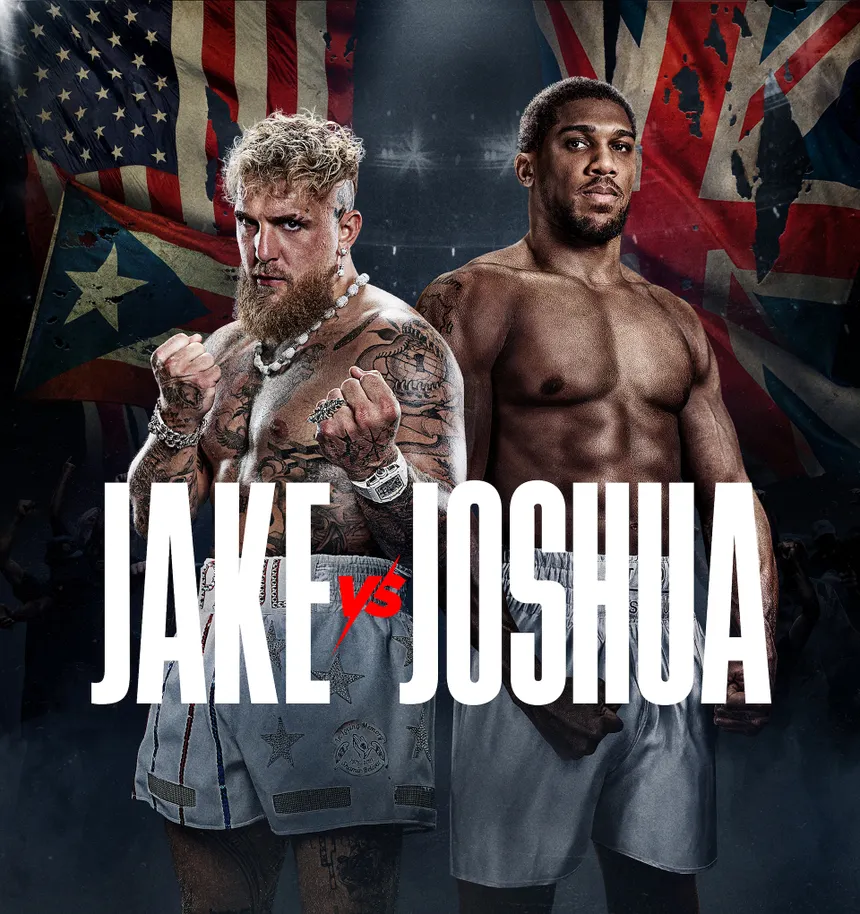
Anthony Joshua, former unified heavyweight champion, comes into this fight as the far more accomplished and proven boxer, but also as a man who has experienced both the heights of the division and the setbacks that forced him to “reset” his career. In the opposite corner stands Jake Paul, a YouTube phenomenon who has reinvented himself as a professional boxer, building a respectable résumé in terms of activity and preparation, but without having faced a true elite heavyweight until now.
This matchup will take place on a global stage with enormous media reach, generating constant news, social discussion and a flood of pre‑fight predictions across every major platform. The fight is tailor‑made for massive engagement on any Youtube Channel focused on breakdowns, tactical analysis and betting angles, as it blends genuine sporting jeopardy with the entertainment value of a crossover event.
Anthony Joshua form
Anthony Joshua is a modern textbook heavyweight: tall, long‑armed, fundamentally sound and at his best when he works behind a strong jab to control range. His style has evolved from an aggressive finisher to a more measured, calculated boxer‑puncher who prefers to set up his power rather than rush for the early knockout at all costs. When he establishes his jab, everything else flows: straight right hands, uppercuts up close and short combinations that carry real stopping power.
Joshua’s main strengths are clear. He has fought, and beaten, genuine world‑class heavyweights, has gone deep into championship rounds, and knows how to adjust mid‑fight when things are not going his way. His size and physical strength allow him to dominate the clinch and push opponents back, while his straight punching remains sharp enough to hurt almost anyone in the division when he lands clean. However, he has shown vulnerability when put under sustained pressure, and his confidence has occasionally dipped after knockout defeats, making his mentality and pacing key variables on fight night.
In terms of tempo, Joshua performs best when he can dictate a medium pace: not a wild brawl, but not a slow spar either. He likes to get his reads in the early rounds, then gradually increase his output as he finds his timing. Recent performances have shown a more controlled version of AJ, focused on minimizing mistakes, but with flashes of the ruthless finisher when he senses his opponent is hurt or fading.
Jake Paul form
Jake Paul has built his career primarily against former MMA champions and experienced combat sports athletes, gradually adding professional boxers to his record as he developed. His style is relatively straightforward but steadily improving: a functional jab, a heavy right hand and basic defensive habits such as a high guard and more disciplined footwork than in his early fights. He is an orthodox fighter who often looks to set traps and land the overhand or straight right as a counter.
Paul’s strengths lie in his youth, self‑belief and willingness to take the sport seriously, investing in full professional camps and high‑level sparring. He is comfortable under bright lights, used to big arenas, press tours and constant media scrutiny, which means the magnitude of this event is unlikely to intimidate him. At the same time, his weaknesses are also evident: he lacks experience against elite heavyweights, his fundamentals—though improved—are still less refined than a seasoned world‑level boxer’s, and he is naturally smaller and less proven at true heavyweight power exchanges.
Regarding fight rhythm, Paul tends to operate best in shorter fights where he can maintain a steady but not frantic pace, looking for big moments rather than outboxing opponents round after round. He prefers to read the opponent from the outside, then step in with a committed right hand when he anticipates a pattern. Against Joshua, he will be forced to negotiate not just skill and experience, but also a significant size and strength gap over eight demanding rounds.
Head‑to‑head comparison
In pure timing, the edge should belong to Joshua. Years at the top level have sharpened his ability to read feints, spot openings and punish technical mistakes, particularly when opponents overreach or square up under pressure. Jake Paul’s timing has improved over the course of his career, but doing that work against smaller or less complete boxers is very different from timing a former unified heavyweight champion with a proven jab and finishing instinct.
In terms of distance control, Joshua is the superior fighter. He knows how to establish and maintain his preferred range with a stiff jab, using it as both a measuring tool and a damaging weapon. When he is disciplined, he forces opponents to cross a long, dangerous corridor to get to him, exposing them to straight shots on the way in. Paul, by contrast, is used to facing opponents closer to his own size; here, he will need to slip or step around a much longer reach while trying to close the gap without eating clean, thudding punches.
Defensively, Joshua has had his chin questioned but still possesses a more complete defensive framework than Paul: a higher, more structured guard, better understanding of angles and a stronger sense of when to hold or smother attacks. Paul still shows flaws when backing up in straight lines, sometimes dropping his lead hand or overcommitting with his right hand and leaving himself open for counters. When it comes to knockout power, Joshua is clearly the heavier hitter, and crucially, his power is battle‑tested against true heavyweights. Paul can punch, especially with his right, but he has not consistently proven that power against big, elite heavyweights with AJ’s size and resilience.
Stylistically, the matchup looks like a classic “elite boxer‑puncher vs ambitious but less seasoned puncher.” Joshua’s long‑range, jab‑led game is designed to punish a fighter like Paul who relies heavily on the right hand and must take risks to get inside. Unless Joshua abandons his discipline or gets reckless in search of a statement finish, the styles naturally favor the former champion.
Possible fight scenarios
For this bout to reach the judges after eight rounds, Jake Paul would likely need to show more defensive awareness and survival instincts than he has in previous fights. That means clinching smartly when hurt, moving laterally instead of retreating straight back and accepting long stretches where he is being outjabbed without panicking. In such a scenario, Joshua’s superior fundamentals and cleaner punching should allow him to bank rounds consistently.
Over the distance, Joshua’s jab, ring generalship and occasional power combinations would probably translate into several clearly won rounds, even if he chooses a relatively cautious approach. If the fight becomes a technical, jab‑heavy contest with limited full‑scale exchanges, the most realistic outcome on the cards would be a wide points verdict for AJ, with scores equivalent to something like six rounds to two in his favor.
In a stoppage scenario, the odds swing even more decisively toward Joshua. His size, punching technique and experience in closing the show make him the natural favorite to score a KO or TKO if either man is stopped. Early on, the danger for Paul will be walking into a right hand or a well‑timed combination as he tries to navigate Joshua’s jab and reach.
A likely script for a Joshua stoppage would be a measured opening round or two, followed by a gradual increase in pressure: more committed jabs, body shots to sap Paul’s legs and a step‑up in tempo once Paul shows signs of discomfort or slows down. From there, a barrage of straight shots, possibly finished by an uppercut or a right hand over the top, could force the referee to intervene or send Paul to the canvas unable to continue. For Jake Paul to score his own KO, he would need the perfect storm: either a moment of complacency from Joshua or a defensive lapse that allows Paul to land a flush, full‑force right hand at just the right time.
No major fight is free from intangibles: cuts, injuries, tactical overhauls and psychological swings can all reshape the narrative. A cut over Joshua’s eye, for example, could prompt him to accelerate the pace earlier than planned, potentially giving Paul more chaotic moments to exploit. Conversely, a cut or swelling on Paul could impair his vision and make it even harder for him to judge distance and avoid the jab.
Another possible twist is a more conservative Joshua than many expect. If he treats this not as a circus, but as a serious step in rebuilding his career, he may decide to prioritize control and risk management over chasing an early knockout, turning the fight into a jab‑heavy masterclass rather than a brawl. On the other side, Paul might adopt a more mobile, spoiler‑like approach, moving constantly, clinching and doing everything possible to drag the fight late, hoping that one big punch in the second half can change everything. These variations do not erase the fundamental gap in class, but they can alter how dramatically that gap shows up on the night.
PREDICTION
Taking styles, size, experience and typical fight patterns into account, the most realistic outcome is a clear Anthony Joshua victory inside the distance. Joshua is the naturally bigger, stronger man, with vastly superior high‑level experience and a skill set tailored to punishing exactly the kind of risks Jake Paul will have to take just to be competitive.
The final prediction is: Anthony Joshua to win by KO/TKO in four rounds or less. The most plausible arc sees Joshua controlling the early exchanges with his jab, gradually dialing up the pressure as Paul struggles to find safe entries. By the mid‑rounds, accumulated damage and the physical grind of dealing with a true heavyweight should leave Paul increasingly static and easier to hit, opening the door for a decisive finishing sequence somewhere around rounds three to five. If, for any reason, the fight goes the full rounds, the secondary prediction would be a wide unanimous decision for Joshua, reflecting sustained control and dominance.
Anthony Joshua vs Jake Paul is more than a gimmick: it is a sanctioned heavyweight contest with real consequences for both men’s records and reputations. A dominant performance and stoppage win would help reassert Joshua as a dangerous factor in the heavyweight landscape, while a poor showing—or worse, a shock defeat—would raise serious questions about his future ambitions at the top level.