


The potential clash between Teofimo Lopez and Shakur Stevenson at 140 pounds would be one of the purest style matchups in modern boxing: an explosive, unconventional puncher with elite athleticism against one of the most complete defensive technicians in the sport. This prediction breaks down styles, tendencies and realistic fight scenarios to project who would have the edge over 12 rounds, and why this matchup is a dream for serious boxing fans.
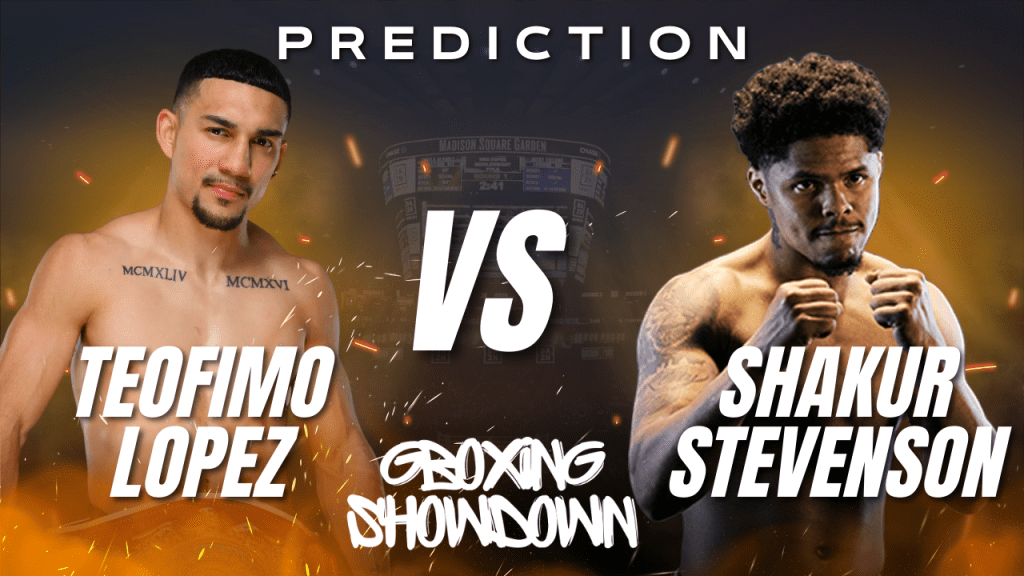
Teofimo Lopez is a two‑division champion who unified titles at lightweight and then dethroned a reigning champion at junior welterweight with a sharp, composed performance that showcased his blend of athleticism, power and timing. Shakur Stevenson, meanwhile, has built his reputation as a defensive master, systematically neutralizing high‑level opponents with elite distance control, reflexes and punch selection across multiple weight classes.
This fight is highly relevant because it pits a dynamic, counter‑punching puncher against perhaps the best range manager and defensive boxer in his era at or around 140 pounds.
Teofimo Lopez: Explosive Rhythm Breaker
Lopez’s style is built around explosive bursts, creative angles and an unconventional rhythm that makes him difficult to time. He blends power punching with intelligent footwork, often stepping around opponents to create openings for heavy right hands and check hooks rather than working behind a classical high‑volume jab.
- Strengths
- Fight‑changing power, especially in the right hand, with the ability to hurt elite opposition when he connects clean.
- Sharp counter‑punching: he draws leads, then answers with compact, explosive shots that can instantly swing momentum.
- Big‑fight temperament; he has already proven he can rise to the occasion against top‑tier names and under bright lights.
- Weaknesses
- Inconsistent output and focus from round to round; there are fights where his activity and discipline dip, creating scoring opportunities for more consistent technicians.
- Defensive lapses when he falls in love with his power, occasionally squaring up or reaching with shots and leaving counters open.
- At times, he can be too eager to prove he can outbox slick opponents, which can draw him into the wrong kind of fight strategically.
- Pace, rhythm and recent form
Lopez tends to fight in spurts, controlling pockets of time rather than every second of every round, which can look brilliant in highlight moments but sometimes concedes rounds to busy, accurate opponents. His recent showings at 140 suggest he has adjusted well to the weight, carrying both speed and power while boxing more thoughtfully. Overall, he comes into a Stevenson matchup as a proven, dangerous champion whose ceiling rises with the magnitude of the event.
Shakur Stevenson: Defensive Master at Range
Shakur Stevenson’s identity is built on world‑class defense, control of distance and efficient offense rather than raw volume or one‑punch power. He uses his jab, subtle footwork and posture to keep opponents off‑balance, forcing them to reach, then making them pay just enough to win rounds clearly while taking minimal damage.
- Strengths
- Elite defensive craft: blocks, slips, shoulder rolls and hand‑fighting make clean head shots very hard to land.
- Superb distance control and timing off the jab, allowing him to consistently win the “first punch” battle and freeze opponents.
- Composure and ring IQ; he rarely takes unnecessary risks and is excellent at banking rounds once he figures out an opponent’s rhythm.
- Weaknesses
- Conservative offense at times; critics point to stretches where he seems content to do just enough, which can create fan frustration and closer scorecards if judges favor aggression.
- Limited one‑shot power at the elite level; he tends to win through accumulation and control rather than fight‑ending shots.
- Against certain styles, he can be overly cautious, leading to “low‑event” fights where a single big moment from the opponent could swing perception.
- Pace, rhythm and recent form
Stevenson typically dictates a measured pace, preferring to slow opponents down mentally and physically rather than engage in high‑tempo exchanges. His recent bouts show that while his dominance in terms of landed/absorbed ratios remains strong, there is ongoing debate about whether his low‑risk approach could cost him against explosive punchers who are willing to gamble more.
Direct Style Matchup
This fight is less about who is “better” in a vacuum and more about whose preferred terms define the night: Lopez’s explosive bursts or Stevenson’s methodical control.
- Timing edge
Lopez has excellent timing as a counter‑puncher, particularly against opponents who need to step into range to be effective. However, Stevenson’s entire game is built around denying clean entries and taking away obvious counters, so over 12 rounds, Stevenson likely holds the more consistent timing advantage with his jab and distance reads. - Who controls distance
Stevenson has one of the best distance‑management toolkits in the sport, constantly adjusting small steps in and out to make opponents miss by inches. Lopez uses footwork more to create explosive angles than to run a slow, positional battle, which means he would need to cross Stevenson’s “no‑man’s‑land” repeatedly to have success. On balance, the fighter more likely to consistently control range is Stevenson. - Defense vs knockout power
Lopez clearly carries the greater fight‑changing power, with a history of emphatic knockouts and momentum‑swinging punches. Stevenson, however, specializes in taking that kind of danger away, frustrating power punchers by denying them the clean look they need and making them hesitate before committing. - How the styles mesh
Stylistically, this matchup projects as a tense, high‑stakes chess match where Lopez must accept periods of frustration to create his moments, while Stevenson seeks to keep the exchanges controlled and the punch counts modest. Lopez will try to punctuate rounds with eye‑catching shots; Stevenson will try to make those moments rare and answer with clean, clear scoring punches that persuade judges.
Possible Fight Scenarios
Scenario 1: Fight goes to the cards
Over 12 rounds, the likeliest macro pattern is that Stevenson steadily banks rounds behind his jab, distance control and clean counters while limiting Lopez’s meaningful connects. If the fight remains relatively “low‑event” with few dramatic momentum swings, judges will tend to favor the boxer landing the clearer, more frequent scoring shots, which historically is Stevenson’s wheelhouse.
In this scenario, Lopez wins rounds when he successfully traps Stevenson near the ropes or corners and lets his hands go in short, explosive combinations. But if those windows are sporadic and Stevenson spends most of the night dictating the terms at mid‑range and long‑range, a points verdict favors Shakur.
Scenario 2: KO or TKO finish
If a stoppage occurs, it is more likely to come from Lopez than Stevenson, given his higher track record of fight‑ending power and his ability to hurt opponents even when they are defensively responsible. The danger points for Stevenson would be:
- Early rounds, before he has fully downloaded Lopez’s timing and punch selection.
- Exchanges where he gets a little too comfortable in the pocket, assuming Lopez cannot reach him clean and underestimating the explosiveness of Teofimo’s counters.
A Lopez KO/TKO would most realistically come off a sudden counter as Stevenson is stepping in, or from a sequence where Stevenson is forced to the ropes and Lopez strings together several heavy shots in succession. That said, Stevenson’s historical durability and risk‑management make this less likely than a decision outcome.
Scenario 3: Volatile, tactical surprise
There are plausible surprise dynamics:
- Lopez boxes more patiently than expected, focusing on the jab and body shots to slow Stevenson’s legs, narrowing the skill gap over the middle rounds.
- Stevenson chooses to stand his ground more, trying to make a statement against a big name, which could increase both his scoring and his risk of being clipped.
- Cuts, swelling, or an early knockdown could force a complete tactical adjustment from either man, changing a control fight into a chase, or vice versa.
Final Prediction
Balancing styles, habits and risk profiles, the most realistic outcome is Shakur Stevenson winning a clear but competitive decision over 12 rounds. Stevenson’s strengths—distance control, defensive responsibility, and round‑by‑round consistency—directly target Lopez’s tendencies to fight in explosive bursts and occasionally allow opponents back into rounds through inactivity or defensive lapses.
- Winner: Shakur Stevenson
- Method: Unanimous Decision
- Approximate scores: In the 116–112 range, with some swing rounds depending on how judges value Lopez’s sporadic but dramatic success.
Lopez will almost certainly have moments where he breaks through with a big right hand or a sharp counter that visibly affects the rhythm of the fight. However, over the full 12 rounds, Stevenson’s ability to minimize exchanges, manage distance and steadily out‑land his opponent with cleaner, more frequent scoring shots should allow him to pull ahead on the cards.
Conclusion
Teofimo Lopez vs Shakur Stevenson is the kind of high‑level chess match that rewards knowledgeable fans who appreciate small adjustments, subtle defensive layers and the tension created by a dangerous puncher trying to solve an elite technician. A firm, reasoned prediction leans toward Stevenson by unanimous decision, with Lopez always carrying the threat of a momentum‑shifting moment but likely falling just short on activity and accuracy across 12 rounds.