


The super lightweight clash between Subriel Matias and Dalton Smith is one of those stylistic matchups that naturally generates high-level interest among hardcore fans, bettors and content creators focused on in-depth boxing predictions. This fight pits one of the most feared pressure punchers in the division against a technically polished, rising British contender who believes he has spotted the flaws in the champion’s armour. The contrast in styles, experience and temperaments creates a compelling scenario where small tactical details could decide everything over twelve hard rounds.
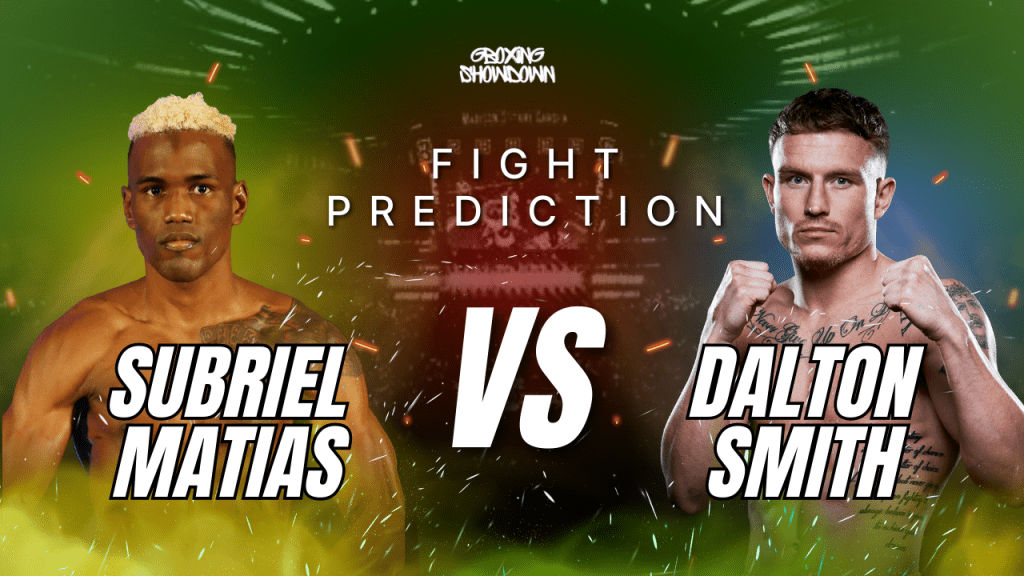
Matias comes into this fight with a reputation as a relentless, heavy-handed destroyer, a fighter who does not just look for knockouts but systematically breaks opponents down over time. His aura is built on volume, power and a willingness to walk through fire. On the other side, Dalton Smith represents the new wave of technically complete British boxers: composed, well-schooled, with sharp timing and a good sense of distance and ring organisation.
This prediction matters because it is not just about who is “better” on paper, but about whose strengths are more likely to prevail when pressure, fatigue and adjustments enter the equation. Fans looking for high-level boxing news and serious analytical content will find here a breakdown that goes beyond clichés, aiming to understand how the fight could unfold, not only who might win. It also provides a strong base for future content pieces and breakdowns on your Youtube Channel, reinforcing a serious, tactical approach to fight predictions.
Subriel Matias: style and form
Style
Matias is a pure pressure fighter with a puncher’s mentality. He comes forward behind a basic but aggressive guard, looking to close the distance, pin opponents on the ropes and force them into uncomfortable exchanges. His style is built around work rate and physicality more than finesse: he is willing to take punches in order to land his own, trusting his toughness and conditioning.
Strengths
Matias’ main strength is his combination of power and volume. He does not rely on a single perfect shot; instead, he overwhelms opponents with a constant stream of heavy punches, especially to head and body, that gradually drain their resistance. His engine is another key asset: he maintains a high pace as the rounds go by, often looking stronger in the middle and late stages than in the early ones.
Psychologically, he is very secure in his identity as a fighter. He knows what kind of fight he wants, and he rarely gets discouraged if things do not go his way in the first few rounds. That unwavering belief in his style can break the will of opponents who are not used to being under pressure for so long.
Weaknesses
The obvious weakness is defence. Matias is frequently there to be hit, especially on the way in. His head movement is minimal, and his guard can be leaky when he attacks, leaving spaces for straight shots, counters and uppercuts. Against a boxer with sharp timing, this can translate into losing early rounds and absorbing clean punches.
Another concern is his reliance on turning the fight into a brawl. When an opponent refuses to stand still, uses angles and clinches intelligently, Matias can look predictable and somewhat one-dimensional. If his pressure is neutralised, he does not have the most versatile plan B.
Rhythm and recent feel
Matias usually starts at a good but not frantic pace, probing, cutting the ring and applying gradual pressure. As the fight advances, he increases the intensity, especially once he senses the opponent is slowing down. In recent performances, even when facing adversity, he has shown that his rhythm tends to break opponents’ structure over time, but he has also revealed that he can be outboxed in phases by clever, mobile fighters who keep things clean and disciplined.
Dalton Smith: style and form
Style
Dalton Smith is a boxer-puncher with solid fundamentals and a clear emphasis on timing and distance. He works behind a sharp jab, uses his feet to control range and prefers to initiate exchanges on his own terms rather than being dragged into chaos. His stance is compact, and he transitions well between offence and defence, especially in mid-range where he can counter and reset quickly.
Strengths
Smith’s biggest assets are his technical polish and his composure. He reads opponents well, adjusts his timing and often makes them miss just enough to create openings for his counters. His jab is a key tool: it allows him to keep aggressive fighters at bay, break their rhythm and set up right hands and hooks.
He also has respectable power. While he may not be seen as a one-punch knockout artist at the elite level, his shots are sharp and accurate enough to earn respect, especially when opponents walk onto them. Combined with his footwork and ring IQ, this makes him a difficult puzzle for straightforward pressure fighters.
Weaknesses
Smith’s main question mark is experience at the very top level and under extreme pressure. He has looked very good against opponents one or two steps below elite, but he has not spent twelve rounds under the kind of sustained, exhausting pressure that Matias brings.
At times, when pushed back, he can drift towards the ropes and corners more than ideal, where his defensive options narrow and he becomes more hittable. In tight exchanges, his guard can open and he can be drawn into trading when it would be smarter to clinch, pivot out or reset at distance.
Rhythm and recent feel
Smith prefers a measured rhythm, especially early on: he uses the opening rounds to study, control pace and accumulate clean touches. As he gains confidence, he tends to sit down more on his punches and impose his own tempo. The big unknown is how well he can maintain that crispness when forced to work at a much higher pace than usual by a relentless opponent.
Direct comparison
Timing and distance
In pure timing, Smith has the edge. He is more precise, more selective and better at picking moments to punch when the opponent is open. If he can keep the fight in the centre of the ring, he should be able to land first and last in many exchanges.
Distance control, however, is a battle of styles. Early on, Smith should be able to dictate range with his jab and feet. But as the rounds progress, the question is whether he can keep that up while dealing with the physical and mental fatigue inflicted by Matias’ pressure. If Matias consistently cuts the ring and forces Smith towards the ropes, then the distance will shift towards the champion’s preferred short and mid-range zones.
Defence vs knockout power
Defensively, Smith is the better fighter: tighter guard, better head positioning and more emphasis on not giving away free shots. Matias’ defence is functional at best and often sacrificed in favour of offence.
In terms of power and destructive potential, the advantage clearly goes to Matias. His punches are heavier, and his style is designed to grind opponents down. Smith can hurt him with clean counters, but if both men are landing at similar volume, the damage will usually favour Matias.
Stylistic fit
On paper, Smith has many of the tools that traditionally trouble pressure punchers: jab, movement, timing, composure and a solid understanding of distance. The question is whether he can execute that game plan for long enough against a fighter who does not stop coming forward and who is comfortable taking two to give one if that one is heavy and damaging.
This is a classic “boxer vs pressure-puncher” dynamic. If it remains a technical fight in the first half, Smith has a strong path. If it turns into a war of attrition in the second half, the stylistic pendulum swings towards Matias.
Possible scenarios
If the fight reaches the final bell, it likely means Smith has managed to avoid sustained punishment, used his legs well and limited the time spent on the ropes. In that scenario, a scorecard favouring Smith is very plausible, with him winning many of the early rounds and doing just enough in the later ones to keep things under control.
However, even in a decision scenario, scorecards could be close. Matias’ aggression and heavier shots could sway judges in rounds where punch volume is close but impact favours the champion. Tight scores like 115–113 either way would not be surprising if Smith has success early and Matias rallies late.
If there is a stoppage, the more likely author is Matias. His path to a KO/TKO runs through consistent pressure, body work and forcing Smith into prolonged exchanges on the ropes or in the corners. Once Smith’s legs slow down and his guard starts to open, Matias’ volume and power could compel a referee or corner stoppage rather than a single one-punch knockout.
Smith’s chances of scoring a stoppage are lower but not nonexistent. If Matias’ defence is as open as usual and Smith’s timing is on point, a perfectly timed counter in the early or middle rounds could badly hurt the champion and create a finishing opportunity. But given Matias’ proven toughness, relying on a clean knockout is a risky assumption.
An alternative scenario involves cuts, accidental clashes or unexpected tactical adjustments. Matias might surprise by using more controlled pressure, feints and selective bursts instead of constant all-out aggression. Smith might rely more heavily on clinching, dirty boxing inside and body shots to slow the champion down.
In that type of messy, stop-start fight, momentum could swing several times. It would still likely favour the fighter more comfortable in chaos — Matias — but it would also increase the chance of controversial scorecards or a doctor’s stoppage due to cuts.
Final prediction
Balancing all these elements, the fight looks like a classic battle of structure versus chaos, technique versus pressure. Smith has the cleaner boxing, better defence and sharper timing, especially in the first half of the fight. Matias brings the greater power, the experience in brutal wars and the kind of pressure that can erode even well-schooled opponents.
The key question is not whether Smith can outbox Matias in phases — he almost certainly can — but whether he can do it consistently for twelve rounds without his output dropping and his legs slowing under constant fire. The expectation here is that, even if Smith starts well and wins a portion of the early and mid rounds, the physical and mental wear will begin to show as the fight passes the halfway mark.
This outcome aligns with the idea that Smith will have strong moments and may look like the better boxer in the early going, but Matias’ pressure and power ultimately tilt the fight in his favour as the rounds accumulate