


The duel between Masamichi Yabuki and Félix «El Gemelo» (The Twin) Alvarado for the IBF World Flyweight title is one of the most intriguing fights on the calendar, pitting two dangerous punchers at very different stages of their careers. It is Yabuki’s first defense as IBF Flyweight champion against a mandatory challenger with vast world championship experience, making this clash a highlight for any serious boxing fan.
After several changes of venue, the fight will finally take place on December 27th at the Aichi Sky Expo in Tokoname, Japan, as part of a card organized on Japanese soil. Initially, there was talk of Hermosillo, Mexico, but the organization moved the event to Japan, which gives Yabuki the advantage of fighting at home and presents Alvarado with the challenge of performing as a visitor again, something he has successfully done in the past.
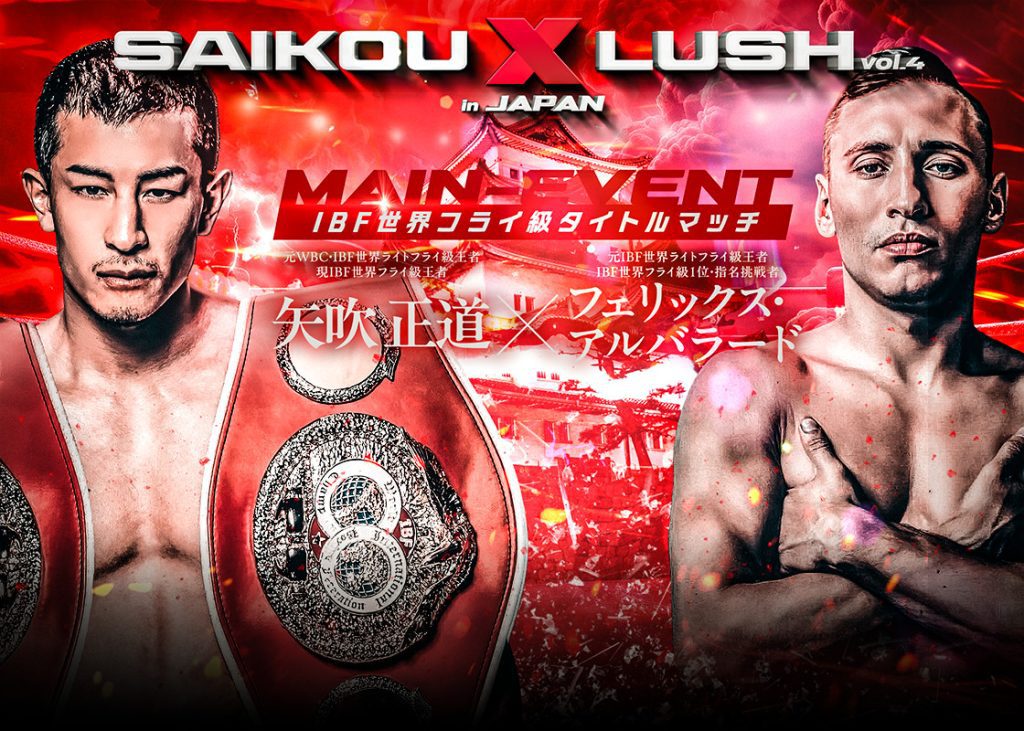
Analysis of Masamichi Yabuki
Masamichi Yabuki arrives with a record of 18 wins, 4 losses, and 17 knockouts, clearly reflecting his profile as an explosive puncher rather than a stylist. He is a Japanese boxer forged by facing high-level opposition, with all his defeats coming against rivals who would become world champions or top-level contenders.
His style combines controlled aggression, a high guard, and long, powerful punches, especially the straight right and hooks that constantly punish the head and body. Yabuki is not a boxer of a thousand defensive resources, but he makes good use of his reach, maintains a solid stance, and usually commands respect from the first exchanges.
Among his strengths is serious knockout power for the weight class, supported by the very high proportion of wins before the limit, as well as the ability to stay cool in big fights, as demonstrated when he dethroned Sivenathi Nontshinga to win the IBF Minimumweight title. He subsequently moved up to Flyweight and took the belt from Angel Ayala, showing that his punching power and competitive mentality remain strong up a division.
Regarding weaknesses, Yabuki has been stopped before the limit, as in his rematch with Kenshiro Teraji, indicating that he is not invulnerable under sustained pressure. Furthermore, his puncher style with functional but not elusive defense can expose him to taking a high volume of punches if the opponent has good cardio and pace, which is highly relevant against a warrior like Alvarado.
He enters this defense riding a five-fight winning streak since the loss to Teraji, including two consecutive world title coronations: first against Nontshinga at Minimumweight and then against Ayala at Flyweight. That winning streak, coupled with fighting again in Japan, places him at a moment of maximum confidence in his career.
Analysis of Félix “El Gemelo” Alvarado
Félix Alvarado presents an approximate record of 42 wins, 4 losses, and 35 knockouts, long consolidated as one of the most feared punchers in the lower weight classes. The Nicaraguan was already an IBF Minimumweight world champion, a title he won by knocking out Randy Petalcorin and defended with convincing victories over Reiya Konishi and DeeJay Kriel.
His style is that of an aggressive brawler, with high punch output, who constantly moves forward and pressures from the first round, seeking to wear down the opponent with shots to the body and face. Alvarado rarely speculates: he usually takes risks to impose his pace, relying on his punching power and his ability to fight at a high rhythm for many rounds.
Among his strengths, besides his punching power, his experience in world title fights in different countries and his mental resilience to compete as a visitor stand out. He has achieved important victories in the Philippines, Japan, the United States, and other settings, accustomed to hostile environments and judges’ decisions that have sometimes not favored him.
As weaknesses, his highly offensive style leaves clear defensive gaps, especially when he closes distance with long combinations and neglects returning his hands to guard. Furthermore, at Flyweight, he has already suffered a clear decision loss to Sunny Edwards and a controversial points loss to Angel Ayala, indicating that when he fails to impose his knockout power, he can fall behind on the scorecards if the opponent boxes with discipline.
Alvarado comes into this fight with three consecutive wins in Nicaragua, the last one being a tough but majority decision victory against the undefeated Tobias Reyes, which secured him mandatory challenger status. Although he remains a very dangerous contender, his age and the accumulated wear from so many wars may play a significant role in this matchup.
Direct Comparison between yabuki vs alvarado
In pure punching power, both are very respectable, but Yabuki presents a very high knockout rate relative to his wins, while Alvarado combines power with almost incessant volume. The difference lies in that the Japanese tends to finish with fewer but cleaner and more precise punches, while the Nicaraguan accumulates damage through insistence and constant pressure.
In distance control, the theoretical advantage goes to Yabuki, who has shown himself more comfortable using his jab and relative height to manage the fight from mid-to-long range, carefully choosing moments to enter with strong combinations. Alvarado, on the other hand, seeks to cut off the ring, corner the opponent, and turn the night into a battle of attrition at close range, where he feels in his natural habitat.
Defensively, neither is a specialist, but Yabuki appears slightly more orderly in his guard and basic movement, while Alvarado exposes himself more when entering, relying on his chin and offensive response capability. In terms of experience at this level, both have been world champions, but Alvarado’s journey through extremely tough fights and multiple countries is slightly wider in volume of wars.
The style matchup points to a contest where Yabuki will try to box with a certain patience, hit hard, and avoid being cornered, while Alvarado will try to close the space from the first round to impose his pressure. If the Japanese manages to maintain the center of the ring and punish the challenger’s entries, he can clearly rack up rounds; if the Nicaraguan manages to stick to the champion’s chest and drag him into prolonged exchanges, the fight becomes «El Gemelo» territory.
Possible Scenarios
If it Goes to Decision
In a fight that goes the distance, the slight theoretical advantage seems to be on Yabuki’s side, due to his ability to land cleaner shots, exploit the home-field advantage, and better control the pacing. The Japanese can build clear rounds based on jabs, straight rights, and specific combinations that make a difference in the judges’ perception.
Alvarado could score well if he manages to maintain a high pace and work the body extensively, forcing Yabuki to constantly move and reducing his offensive production. However, if many of his attacks are blocked or perceived as less clean than the champion’s impacts, he risks losing close rounds on the scorecards in Japan.
If KO or TKO Occurs
The knockout scenario is very realistic for both, as both Yabuki and Alvarado have the power to end the night abruptly. Yabuki could land a decisive hand on an Alvarado who enters with his guard somewhat open, especially a straight right or a short hook when the Nicaraguan tries to close the distance with too much commitment.
For his part, Alvarado has the ability to force a TKO if he manages to subject the champion to constant punishment against the ropes, especially to the body, accumulating blows until an official stoppage or a noticeable decline in Yabuki’s response. The fact that the Japanese has been stopped before indicates that if he gets caught in a storm of punches with no clear way out, a knockout loss is not an outlandish hypothesis.
Alternative Scenario and Unforeseen Factors
A key factor could be the pace at which each fighter starts: if Yabuki enters too coldly and allows Alvarado to impose pressure from the first round, he could concede early rounds that complicate the later development. Conversely, if the champion quickly establishes respect with his punching power, it could make the Nicaraguan think twice before aggressively charging forward.
Possible cuts, accumulated wear, or underlying physical issues in the final rounds may also be influential, especially for Alvarado who has a lot of mileage and wars in different divisions. Any such unforeseen factor can tip the scales in a fight that, on paper, is full of variables, ideal for deep analysis on a YouTube Channel focused on technical predictions.
Final Prediction
Considering the current momentum of each fighter, the home-field advantage, age, wear level, and the combination of styles, the most consistent prediction is a Masamichi Yabuki victory. The Japanese seems to arrive slightly fresher, with a recent positive streak and a boxing style that, if he maintains tactical discipline, can partially neutralize Alvarado’s pressure.
The specific choice of this analysis is: Masamichi Yabuki wins by unanimous decision after twelve intense rounds, with an approximate margin on the scorecards around 115-113 or 116-112, reflecting a competitive fight but with a champion who is more precise and effective in the key moments. Alvarado will have his moments of success, especially in the middle of the fight, but the combination of Yabuki’s selective punching, his distance management, and the home-field factor should tip the scales toward the Japanese.
As an alternative scenario, a late TKO by Yabuki between rounds 10 and 12 is not ruled out if the accumulated punishment and the champion’s precision eventually break the Nicaraguan’s resistance. However, the main prediction remains firm on a Yabuki win on points, in a demanding fight that would solidify his reign in the IBF Flyweight division.
Masamichi Yabuki vs. Félix Alvarado is a high-voltage clash between two true warriors, with a world title at stake and featuring the classic narrative of the slightly fresher champion against the dangerous veteran challenger. The result could reshuffle the Flyweight landscape, defining whether Yabuki consolidates himself as a reference in the category or whether Alvarado achieves a second great run as a champion in another division.
For those who follow the latest boxing news and consume detailed analysis in written format or on a YouTube Channel, this fight offers perfect material to dissect styles, strategies, and possible dramatic twists. As the date approaches, predictions will become polarized, but in the ring, tactical discipline, distance management, and the ability to withstand the war will be the elements that decide who leaves with the IBF belt.